
Introduction
When installing an underfloor heating system, choosing the right screed is crucial for achieving efficient heat transfer and a flawless floor finish. At SW Liquid Screed & Spray Rendering, we specialise in liquid screeding in Weymouth, providing reliable and thermally efficient solutions designed to work seamlessly with underfloor heating.
This guide explains how liquid floor screed supports underfloor heating systems, its advantages over traditional screeds, and why professional installation makes all the difference.
What Is Liquid Floor Screed?
Liquid floor screed is a self-compacting, pump-applied material designed to create a smooth, even surface.
Unlike traditional sand-cement screeds, it flows easily around underfloor heating pipes, ensuring complete coverage and minimal air pockets.
Key Characteristics of Liquid Floor Screed
- High thermal conductivity – enables better heat transfer.
- Reduced thickness – allows quicker heating response.
- Self-levelling – produces an exceptionally flat surface.
- Faster drying times – walkable within 24–48 hours.
- Minimal shrinkage – reduces cracking risks.
These qualities make liquid floor screed an ideal partner for modern underfloor heating systems.
Why Use Liquid Screeding in Weymouth for Underfloor Heating Systems?
Efficient heating performance depends on how effectively heat is transferred from the pipes to the floor surface.
Here’s how liquid screeding delivers superior results.
Enhanced Thermal Performance
Because it fully encases heating pipes, liquid screed eliminates voids and air gaps, ensuring uniform heat transfer so the entire floor surface warms evenly.
Reduced Depth and Faster Response
Liquid floor screed can be applied at thinner depths than traditional screed, reducing the thermal mass.
As a result, underfloor heating systems heat up faster and operate more efficiently.
Faster Installation and Lower Downtime
Thanks to its fluid consistency, liquid screed can be pumped into place quickly.
It also cures faster, meaning floors are typically walkable within two days — minimising construction delays.
Long-Term Durability
Once set, the screed provides a stable and level substrate that resists cracking and settlement, ensuring long-term performance for your underfloor heating system.
How Liquid Screed Enhances Underfloor Heating Performance
Liquid screed plays a crucial role in improving the efficiency and comfort of underfloor heating systems. Its self-levelling nature ensures complete coverage around heating pipes, eliminating air gaps and allowing heat to distribute evenly across the entire floor surface
Improved Heat Transfer
The dense composition of liquid screed increases contact with heating pipes, promoting efficient thermal conductivity.
This ensures heat energy is effectively transferred into the room.
Even Heat Distribution
Due to its self-levelling nature, the floor surface remains uniformly thick, helping distribute heat evenly and avoiding cold spots across the room.
Lower Energy Demand
With better conductivity and faster response times, your heating system requires less energy to reach desired temperatures — supporting improved comfort and efficiency.
Services by SW Liquid Screed & Spray Rendering
SW Liquid Screed & Spray Rendering provides a complete liquid floor screed service for domestic and commercial projects across Weymouth, Dorset, Bournemouth, Poole, and surrounding areas.
Their experienced team focuses on precision installation and works with leading screed products such as Cemfloor and Weber to ensure reliable results tailored to each project.
What Makes SW Liquid Screed Stand Out
- Experienced specialists with local knowledge
- Professional equipment for fast, clean application
- High-performance materials suited for underfloor heating
- Customer-focused approach with attention to detail
Liquid Floor Screed vs Traditional Screed
When comparing liquid floor screed with traditional sand and cement screed, the differences in performance and efficiency are clear:
- Smoother finish: Liquid screed provides a seamless, level surface ideal for modern flooring.
- Faster installation: Its self-levelling properties allow for quicker and easier application.
- Superior heat transfer: Performs exceptionally well with underfloor heating systems, ensuring even heat distribution.
- Thinner layers: Requires less depth compared to traditional screeds, improving efficiency.
- Shorter drying times: Can be walkable within 24–48 hours, minimising project delays.
- Reduced manual labour: Self-levelling nature eliminates the need for extensive hand-finishing.
- Fewer imperfections: Produces a consistently smooth and durable surface with minimal effort.
Overall, liquid floor screed is the preferred choice for both new builds and renovation projects, offering a balance of speed, strength, and thermal performance.
Comparison Table: Liquid vs Traditional Screed
Below is a clear comparison between liquid floor screed and traditional sand and cement screed, highlighting the key differences in performance, efficiency, and application.
Installation Best Practices for Underfloor Heating with Liquid Screed
A successful installation requires planning, precision, and professional handling to ensure an even, long-lasting floor finish.
Proper Preparation
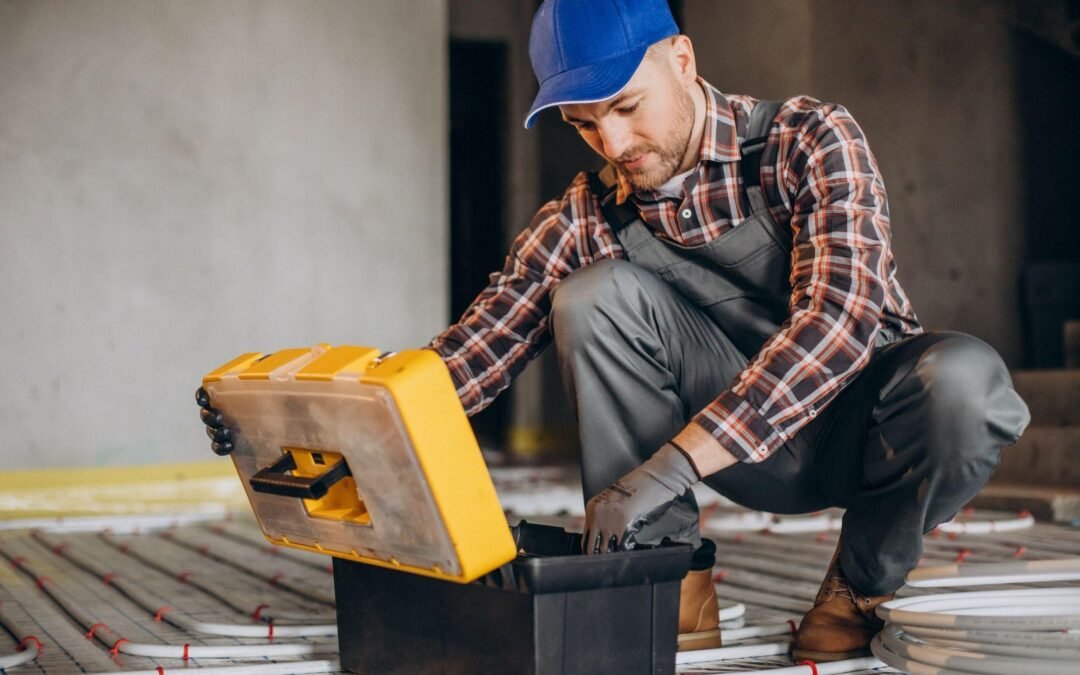
Before pouring, heating pipes must be securely fixed, and insulation and membranes correctly placed.
SW Liquid Screed & Spray Rendering ensures every layer — insulation, DPM, slip membrane, and screed — is properly configured to achieve the best results.
Controlled Pouring and Finishing
The liquid screed is pumped evenly across the floor and allowed to self-level, producing a perfectly flat surface ideal for a range of floor coverings such as tiles, vinyl, or laminate.
Curing and Drying
Curing typically allows for light foot traffic within 24–48 hours.
Full drying times depend on environmental conditions, but the process is considerably faster than traditional sand and cement screeds.
Impact on Flooring Finishes
A perfectly level and thermally efficient base enhances the performance and lifespan of your chosen flooring material.
- Tiles: Reduced cracking and improved adhesion.
- Wood or Laminate: Stable moisture levels prevent warping.
- Vinyl or Carpet: Even heating and a smooth surface finish.
The uniform consistency of liquid floor screed ensures that all types of floor coverings last longer and perform better, especially when paired with underfloor heating systems.
Local Expertise and Why It Matters
Choosing a local installer for liquid screeding in Weymouth ensures a strong understanding of local building conditions and quicker response times.
SW Liquid Screed & Spray Rendering combines local expertise with professional service standards, making them a trusted choice across Dorset and the surrounding areas.
Their reputation for quality workmanship, reliability, and precise application guarantees that every project — from new builds to refurbishments — meets modern construction standards.
Conclusion
When paired with underfloor heating, liquid floor screed offers an ideal combination of performance, durability, and energy efficiency.
From faster installation to superior thermal conductivity, it helps create comfortable and efficient living spaces. For professional liquid screeding in Weymouth, trust SW Liquid Screed & Spray Rendering to deliver reliable, high-quality results. To discuss your project or request a tailored quote, contact us today.
By reducing labour time, improving heat transfer, and delivering a flawless surface, liquid screed ensures long-lasting results that meet today’s performance and efficiency standards. Whether for a domestic build or commercial project, it provides a practical, reliable, and cost-effective flooring solution designed for contemporary needs.
Frequently Asked Questions
What thickness is recommended for liquid screed with underfloor heating?
Most systems require a depth of around 35–50 mm, depending on the product type and heating design.
How soon can the underfloor heating system be used after screeding?
Heating should only be commissioned after the screed has sufficiently cured — usually after 7–10 days.
Does liquid screed reduce energy costs?
Yes. Thanks to better heat transfer and faster thermal response, it supports more energy-efficient operation
Can any floor finish be used over liquid screed?
Yes, once moisture levels are correct, floor finishes such as tiles, wood, vinyl, or carpet can be applied safely.
Is liquid screed suitable for renovation projects?
Absolutely. Its thinner profile, faster curing, and smooth finish make it ideal for both new builds and renovation projects.